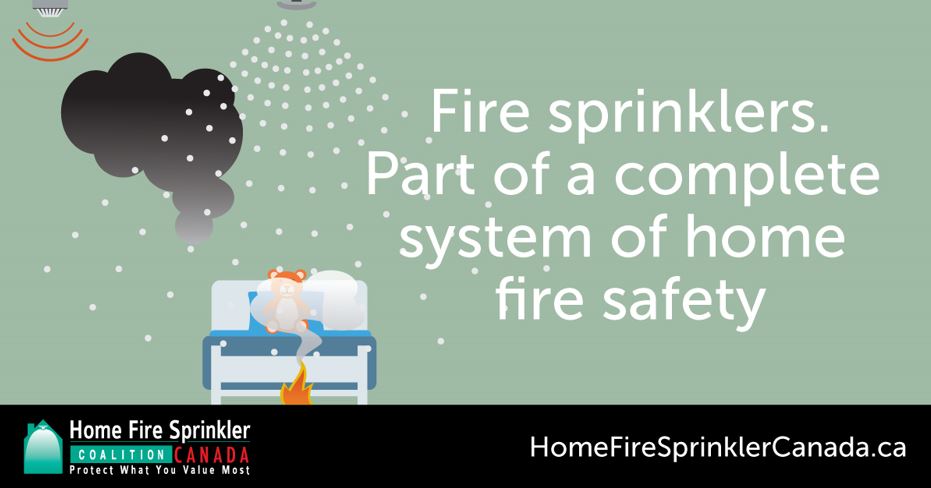
May 16-22 is Home Fire Sprinkler Week in Canada, and Vernon Fire Rescue Services (VFRS) is helping to share the message that properly installed and maintained home fire sprinkler systems can help save lives.
“When taking a look at your home and considering whether you have a complete fire safety system in place, you want to think about smoke alarms, carbon monoxide alarms, a home escape plan and home fire sprinklers,” said Deputy Fire Chief Dwight Seymour.
According to the National Fire Protection Association (NFPA), home fire sprinklers can dramatically reduce the heat, flames and smoke produced in a fire.
“Just a couple months ago, our team experienced a clear example as to the effectiveness home fire sprinklers can have in protecting property and saving lives,” said Deputy Chief Seymour.
At approximately 11:15 p.m. on March 25, VFRS was dispatched to a report of a structure fire on Falcon Point Way in the Predator Ridge area. Upon arrival, firefighters were told a fire had started in the basement of a duplex in a workshop area.
Firefighters entered the home and discovered the sprinkler system had already activated and extinguished the fire, preventing it from spreading to other parts of the home or the adjacent duplex unit. The investigation into the fire indicated a pile of rags that had been used to stain a deck earlier that day had self-ignited.
“When storing oil-covered or greasy rags, it’s best to keep them outside, away from all structures and combustible containers,” said Captain Dean Wakefield. “However, we know that sometimes accidents happen or people may not be aware that materials like oily rags can self-ignite. This fire was purely accidental in nature and happened late at night while the homeowners were sleeping upstairs, so because of the working smoke detectors and fire sprinkler system, not only was the home protected and damage minimized, but everyone inside both units made it out safely.”
As part of its Canada-wide education campaign, the NFPA says:
• Fire departments typically use roughly 10 times as much water as a fire sprinkler would use to contain a fire.
• Fire sprinklers are environmentally friendly. They can reduce the amount of water run-off and pollution, fire damage by up to 71%, and water usage to fight a home fire by as much as 91%.
• Cigar smoke or burnt toast will not activate a fire sprinkler. Only the high temperature of a fire will activate the sprinkler.
• A home fire sprinkler system can help reduce the homeowner’s insurance premium.
To learn more about home fire sprinkler systems, you can visit the website for the NFPA Fire Sprinkler Initiative or the Home Fire Sprinkler Coalition Canada. And to view a demonstration of a structure fire with and without a home fire sprinkler system, you can check out the Home Fire Sprinkler Coalition’s video here.